Investor Education
Different Financial Products and Their Suitability Across Life Stages

The Right Financial Product at the Right Stage Can Make a Meaningful Difference
There is no single financial product that is suitable for everyone.
A young professional beginning their career, a parent investing for a child’s education, a business owner approaching retirement, and a retired individual looking for regular income may have completely different financial needs.
This is why the decision should begin not with Which product should I buy?, but with:
What is my financial goal, and where am I in my financial journey?
Different financial products serve different purposes. Understanding their role — and using them appropriately at different life stages — is an important part of managing money well.
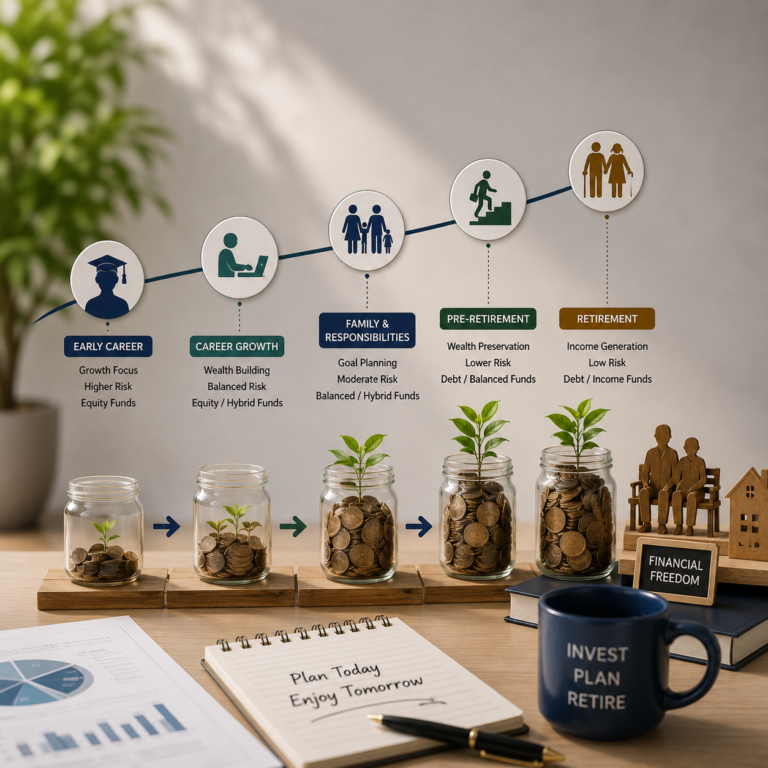
Early Career: Building the Foundation
The early years of earning are an excellent time to develop good financial habits. The priorities at this stage may include:
- Building an emergency fund
- Getting adequate health and life insurance
- Starting systematic investments
- Saving for short- and medium-term goals
- Beginning to invest for retirement early
Products such as bank deposits, recurring deposits, mutual fund SIPs, PPF and appropriate insurance products may each have a role, depending on the individual’s goals, risk profile and time horizon.
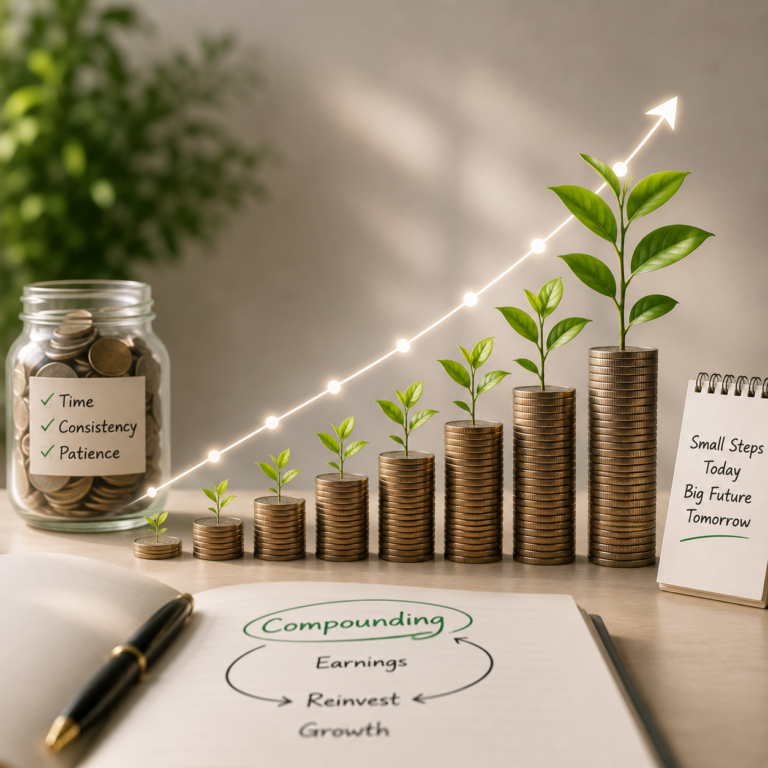
For long-term goals, starting early can provide the valuable advantage of time and compounding.
Family and Wealth-Building Stage: Growing Your Financial Base
As income increases and responsibilities grow, financial goals often become more diverse. Buying a home, children’s education, family protection, wealth creation and investing for retirement may all become important simultaneously.
At this stage, investors may consider a combination of equity and debt mutual funds, bank deposits, PPF, bonds and other suitable investment avenues, depending on their objectives and risk tolerance.
The focus should not be on finding the highest-return product. Instead, the objective should be to create an appropriately diversified portfolio aligned with different financial goals.
Pre-Retirement Stage: Protecting and Consolidating Wealth
As retirement gets closer, the investment approach may need to evolve. The focus gradually shifts from simply accumulating wealth towards managing risk and protecting the corpus that has been built.
Investors may review their allocation across equity, debt and other assets based on:
- Years remaining until retirement
- Expected retirement corpus
- Current investments
- Risk tolerance
- Expected retirement expenses
- Other sources of income
At this stage, regular portfolio reviews and appropriate asset allocation can become increasingly important.
Retirement Stage: Managing Income and Longevity
Retirement introduces a different financial challenge. During working years, we invest from our income. During retirement, our investments may need to help support our lifestyle.
Products such as bank deposits, debt-oriented investments, mutual funds and government-backed savings avenues, where appropriate, may play different roles in a retirement portfolio.
However, preparing for retirement should not focus solely on generating income. It should also consider inflation, longevity, liquidity, capital preservation and sustainable withdrawals.
A retirement portfolio needs to be designed with the possibility that the investor may live for several decades after retirement.
There Is No “Best” Product — Only a More Suitable Choice
One of the most common mistakes investors make is comparing financial products only on the basis of returns. But suitability depends on several factors.
A product that may be appropriate for a 20-year goal may not be appropriate for a 2-year goal. Similarly, an investment suitable for a young investor with a high risk capacity may not be suitable for someone who is dependent on their investment corpus for regular retirement expenses.
Therefore, before choosing a financial product, consider your goal, time horizon, risk profile, liquidity requirement, tax considerations and overall portfolio.
Think in Terms of Goals, Not Products
A good financial approach begins with identifying what the money is meant to accomplish. For example:
- Emergency fund — liquidity and capital stability
- Short-term goal — lower volatility and suitable liquidity
- Child’s education — long-term growth with periodic reviews
- Wealth creation — appropriate long-term growth assets
- Retirement — accumulation followed by sustainable income and risk management
- Legacy and succession — long-term wealth transfer and appropriate succession arrangements
The product comes after the goal, not before it.
Your Financial Journey Keeps Changing. Your Portfolio Should Too.
Managing money is not a one-time activity. As we move from earning to saving, investing, building wealth, approaching retirement and living in retirement, our priorities change. The financial products we use may need to change as well.
The objective is therefore not to own the maximum number of financial products. The objective is to have the right mix of products, in the right proportion, for the right goals, at the right stage of life.
Because success is not about chasing products. It is about creating a financial strategy that evolves with you.
JVS Financial Landscape LLP
Trusted Financial Guidance. Disciplined Investing. Lasting Wealth.
Disclaimer: This article is intended for general educational purposes only and should not be construed as investment, legal or tax advice. Different financial products have different levels of risk, liquidity, taxation and suitability. Mutual fund investments are subject to market risks. Read all scheme-related documents carefully before investing. Investors should consider their financial goals, risk profile, investment horizon and individual circumstances before making investment decisions.